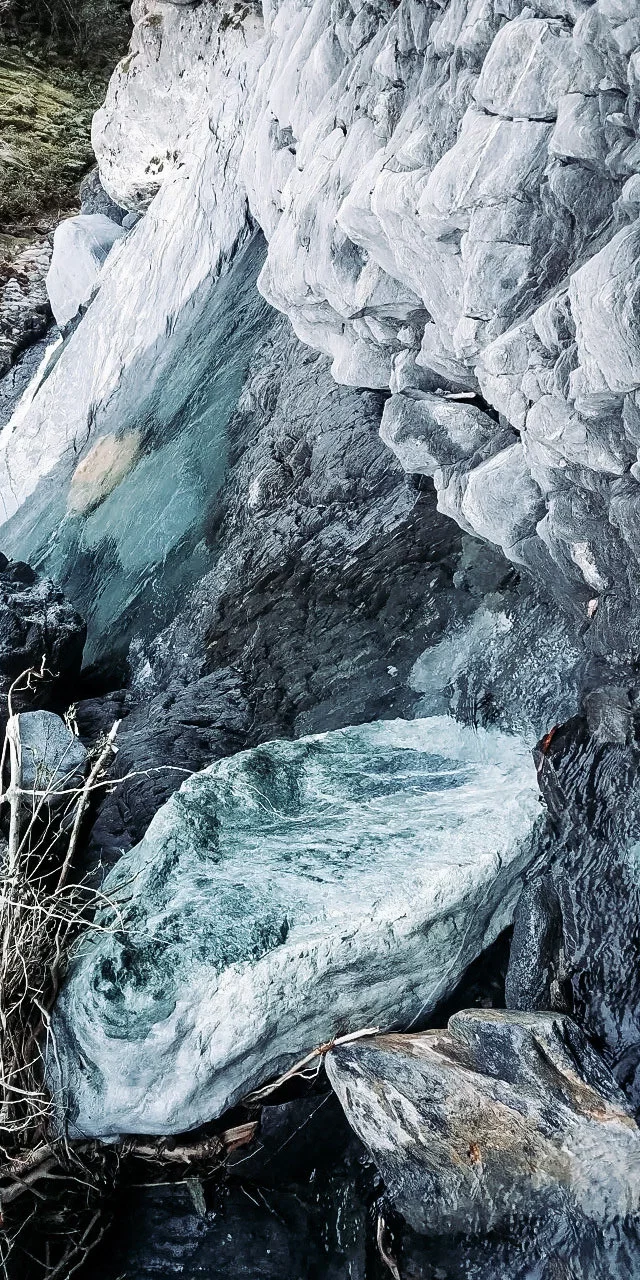
Understanding Pounamu of Aotearoa
Every shade holds a story. Every stone carries whakapapa
Te ara ā Poutini
The path of Poutini
Poutini is a taniwha of great significance in Māori tradition, a guardian connected to the origins of pounamu. He is closely associated to Ngāhue, the atua linked to pounamu and is known as the protector of it’s mauri.
According to kōrero, Poutini swims to Tūhua (Mayor Island) in the Bay of Plenty where he sees the beautiful Waitaiki bathing. Enchanted by her, He kidnaps her and takes her down south along the coastline. Stopping along the way to light fires to keep her warm.
These places later become known as significant sources of stone.
When Waitaiki's husband Tamaahua realises she is missing, he follows in pursuit. Guided by a magical tekateka(dart) that reveals the path ahead, he tracks down the fires Poutini left behind. Each place marks not only the journey but the presence of stone within the land.
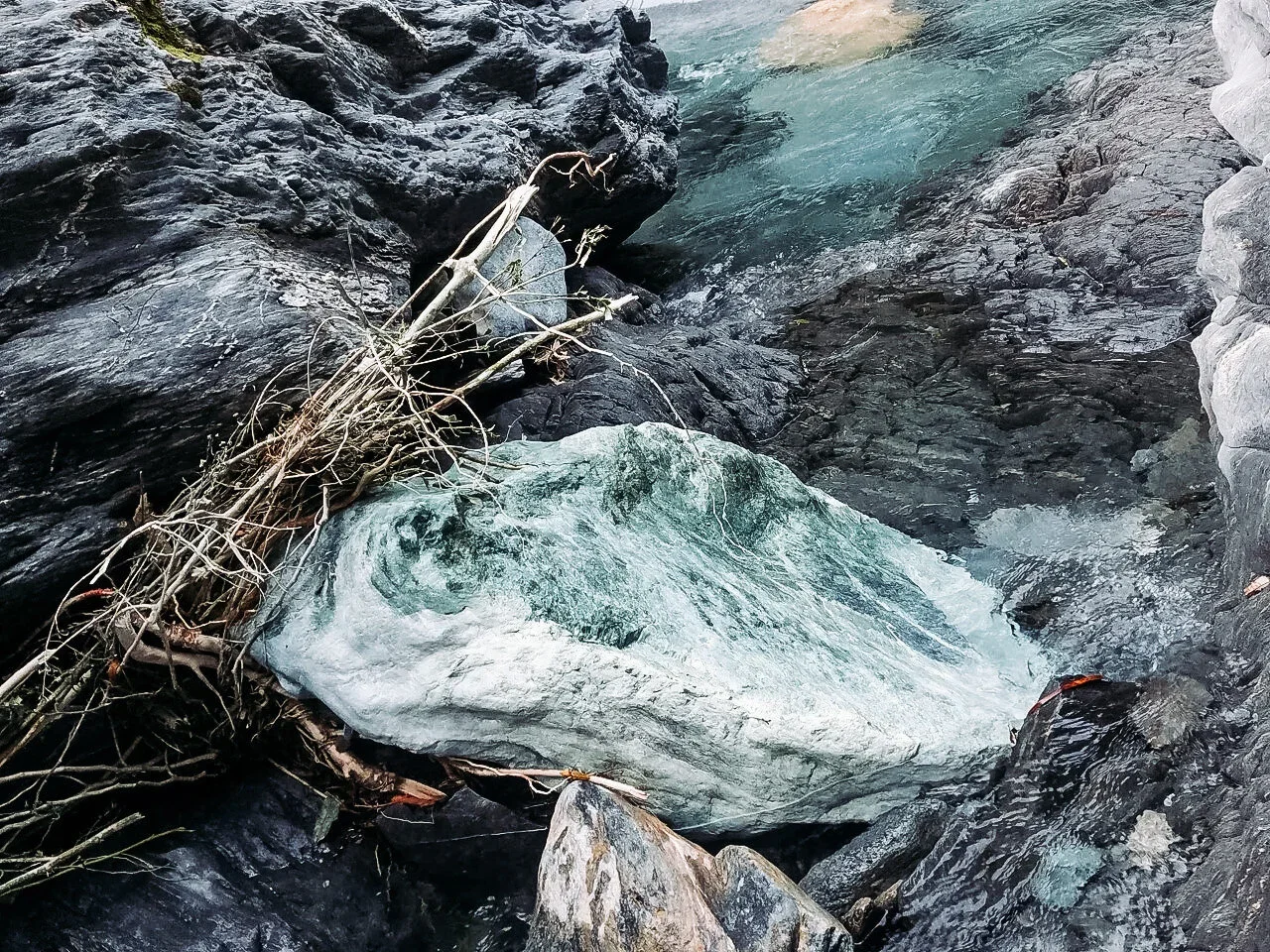
The pursuit stretches down the coast, past rivers and into deep South. Eventually Tamaahua returns to the Arahura River, where he finds Waitaiki transformed into a smooth Inanga Pounamu within the riverbed.
Sensing Tamaahua is near, Poutini had already changed Waitaiki into his own essence, into pounamu itself. He then slips away down the river and back into the sea.
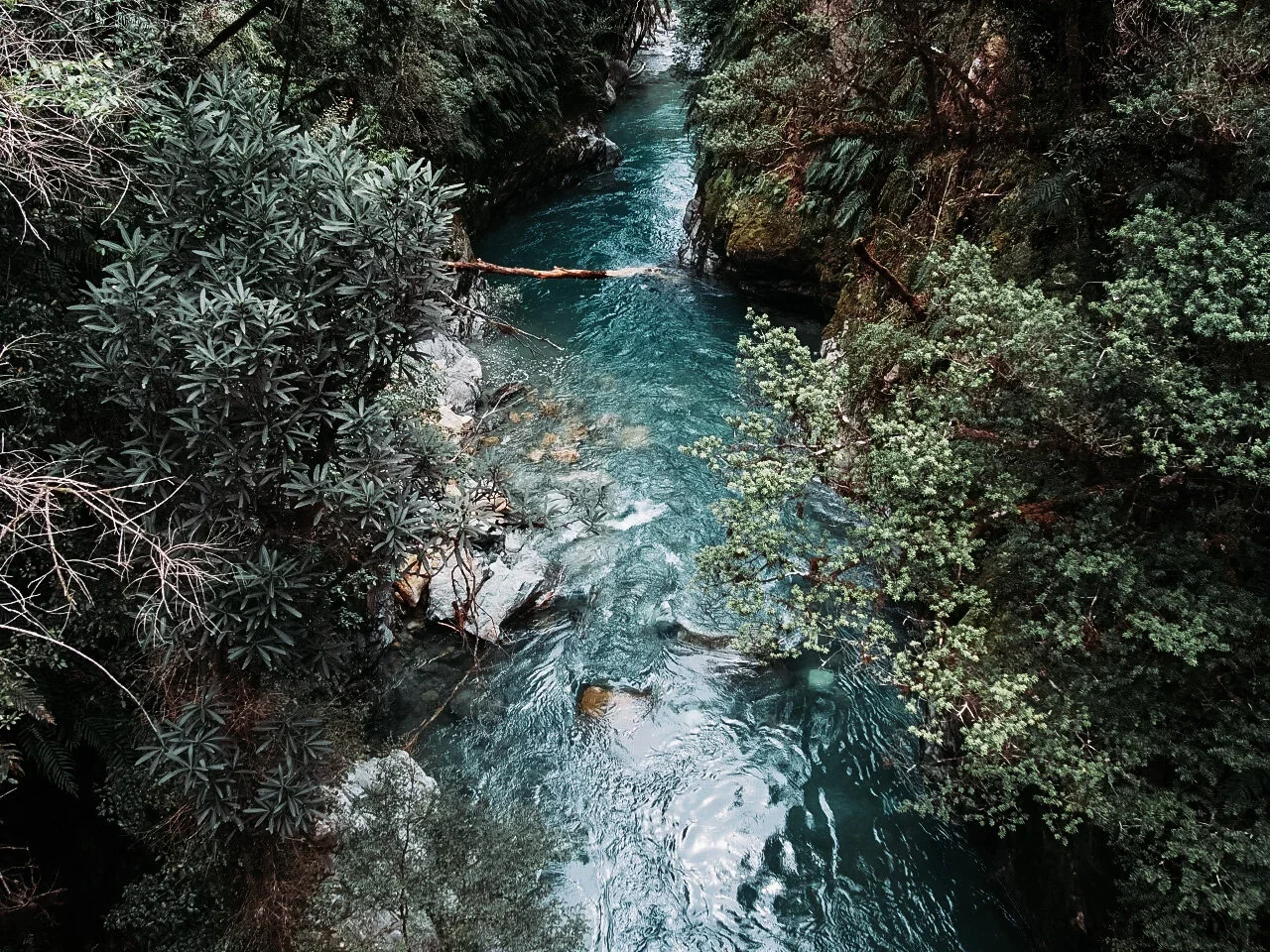
It is said that Poutini moves along the West Coast of Te Waipounamu, watching over both the people and the stone.
This region is known as Te Tai ō Poutini, the tides and waters that carry his name.
Ngā momo Pounamu
Types of Pounamu
Just as no two rivers flow the same, Pounamu reveals itself in many forms. Each variety reflects the conditions of its creations. Carrying subtle or pronounced differences in colour, clarity and presence.
Inanga
Resembling and named after the native Inanga fish, this stone shows subtle grey-blue and pale green hues. Its soft translucence and refined appearance have made it one of the most highly regarded forms of Pounamu.
Kahurangi
Known for it’s vivid, luminous green and remarkable clarity, Kahurangi is free from visible inclusions. The name speaks to something precious and esteemed. A stone long regarded as most revered forms of pounamu.
Kahotea
Taking its name from the flowering white Toetoe, this variety is known for its light, opaque outer layer. Its softness in tone contrast beautifully with the depth that lies within the stone.
Kawakawa
Known for its deep green tones and dark inclusions, this variety is named after the Kawakawa plant. It’s markings are not flaws but part of it’s natural beauty.
Kōkopu
Named after the native Kōkopu fish(Trout), this stone is recognised for its warm yellow and brown hues, layered with darker markings throughout. Earthy and expressive, each piece carries its own unique pattern.
Raukaraka
Inspired by the natural shift of leaves as they turn from green to golden tones, Raukaraka carries warm yellow hues within the stone. Its colouring reflects change, a transition held in solid form.